 Organspende – nützliche Infos
Es ist schon faszinierend und beachtlich, wozu die Medizin mittlerweile in der Lage ist. Das Spenden von Organen nach dem eigenen Tod kann viele Menschenleben retten oder verbessern. Vielen macht der Gedanke daran vielleicht Angst; andere halten Organspende für sinnvoll und befürworten sie. Nach Aussage der deutschen Selbsthilfegruppe Herztransplantation Südwest e.V. besitzen nur 5% bis 15% der Deutschen einen Organspendeausweis. 60% bis 80% wären jedoch zu einer Organspende bereit. Nicht jedeR wird auch wirklich zum Spender/ zur Spenderin, da die äußeren Umstände wie die Todesart und medizinische Eignung für eine Organtransplantation stimmen müssen. Laut dem europäischen Organspendenetzwerk Eurotransplant warteten im Jahr 2010 europaweit 15.591 Menschen auf ein Spenderorgan.
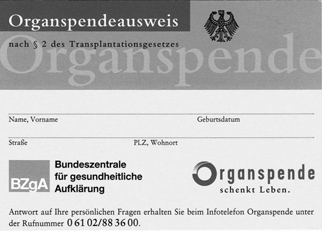
Wegen der hohen Anzahl von Kranken, die auf ein Spenderorgan warten, hat das Thema in vielen europäischen Ländern an Bedeutung gewonnen. Die verschiedenen Länder haben dabei unterschiedliche Gesetze, die die Organspende regulieren. Ein wichtiges Dokument ist der Organspendeausweis. Dieser Ausweis ist eine Willenserklärung, was im Todesfall mit den Organen passiert. Denn letztendlich ist Organspende ein ganz persönliches Thema, zu dem jedeR ganz individuell und freiwillig seine/ihre Entscheidung treffen sollte. Auf dem Organspendeausweis kann man auch eintragen, dass man keine Organe spenden möchte. Die wichtigsten Regelungen und Gründe für und Bedenken gegen Organspende findet ihr in den Links.
Birte, 18, Deutschland
Organ donation - useful information
It is quite fascinating and remarkable what medical science is capable of doing by now. The donation of organs after death can save or improve many human lives. This idea may frighten some people; others believe organ donation to be meaningful and agree to it.
The German self-help group Herztransplantation Südwest e.V. says that 5% to 15% of the German People own an organ donor card. However, 60% to 80% would agree to organ donation in case of an accident. Only a small proportion of people actually become a donor, as the circumstances such as the manner of death and the medical suitability for organ transplantation have to be right.
The European organ donation network Eurotransplant says that in 2010, 15,591 people in Europe were waiting for organ donation. Due to the high number of sick persons waiting for a donor organ, the topic has gained importance in many European countries. The different countries have various laws in order to regulate organ donation. On this page you will find the most important regulations, and what is more, reasons for and objections to an organ donation and a corresponding organ donor card. This card is a declaration of intent on what will happen to your organs in the case of your death. However, You can state on this card that you do not want to donate your organs. Because ultimately, organ donation is a very personal topic and everybody should make an individual and voluntary choice.
Birte, 18. Germany